
In today’s fast-paced world, knowing more about someone’s past can make all the difference, whether you’re hiring for a job, screening a potential tenant, or just ensuring safety in your personal life.
This article dives deep into the realm of free background check sites that actually provide reliable data without sneaky charges, drawing from real testing and insights to highlight what works best. We’ll explore popular options, their strengths, and limitations, while weaving in key aspects like criminal records, public records, and compliance with regulations such as the Fair Credit Reporting Act.
What makes this piece worth your time? It cuts through the noise of unreliable sources, offering practical advice enriched with semantic details on databases, privacy concerns, and how these tools fit into broader contexts like employment or landlord decisions.
Plus, as experts at Excell Investigations in Southern California, we bring authoritative perspectives on why professional help often outperforms free alternatives, all while keeping things accessible for anyone at an 8th-grade reading level or above.
Stick around to learn how to maximize these resources and when to seek our 24/7 free consultation for more thorough results.
Background checks serve as essential tools for uncovering details about a person’s history, helping individuals and businesses make informed choices. At their core, these processes involve searching through various databases to pull together information on criminal records, employment history, education verification, and more.
For instance, when a landlord in Southern California wants to vet a prospective tenant, a solid background check can reveal past evictions or criminal convictions that might impact the rental agreement.
We at Excell Investigations have seen how incomplete data from casual searches can lead to costly mistakes, which is why understanding the fundamentals—like distinguishing between criminal background checks and credit history reviews—is crucial for anyone dipping into this area.
Delving deeper, the reliability of a background check often hinges on the sources it draws from, such as public records, court documents, and sex offender registries.
Regulations play a big role here; the Fair Credit Reporting Act ensures that consumer information is handled fairly, preventing misuse in areas like employment or recruitment. We’ve handled countless cases where clients initially tried free online tools but found gaps in areas like bankruptcy filings or social media profiles, prompting them to turn to professional services for FCRA-compliant reports.
This highlights the importance of knowing what a check entails, from national criminal searches to detailed reports on financial records, to avoid pitfalls in privacy or accuracy.
When searching for dependable free background check sites, it’s vital to focus on those that aggregate public records effectively without requiring subscriptions right away.
Platforms like these pull from government databases, court records, and other open sources to deliver insights on criminal records, address histories, and even property records. In our experience at Excell Investigations, clients in Southern California often start with these to get a quick overview before realizing the need for more in-depth professional investigations.
For example, a basic search might reveal a person’s criminal background, but it could miss nuances like expunged records or recent updates, making it a starting point rather than a final answer.
What sets the best free options apart is their user-friendly interfaces and commitment to privacy, ensuring data isn’t mishandled.
Sites that comply with regulations like the Fair Credit Reporting Act stand out, as they help users avoid legal issues while accessing information on employment history or financial records.
We’ve noticed that while these tools are budget-friendly, they sometimes fall short in areas like social security number verification or detailed criminal court searches, which is where our expertise comes in to fill those gaps with reliable, human-verified results.
Reliability in free background check platforms often comes down to how frequently they update their databases and the breadth of their sources. A site that pulls from multiple jurisdictions can provide a more complete view of someone’s criminal history, including state criminal records and national overviews.
Accuracy isn’t just about the data itself but how it’s presented; misleading reports can stem from outdated information, leading to wrongful assumptions in recruitment or landlord decisions.
Many free sites offer intuitive searches via email or name, making it simple to uncover contact information or social media profiles without technical hurdles.
However, limitations like search quotas can frustrate users, pushing them toward paid upgrades or professional services for unrestricted access.
Free background checks offer a convenient entry point for gathering initial data, but they often lack the depth and verification that professional services provide.
While a free site might scan public records for criminal convictions or driving record checks, it could overlook private databases or require manual cross-checks for accuracy.
At Excell Investigations, we emphasize that our methods go beyond surface-level searches, incorporating undercover surveillance and polygraph testing when needed, ensuring clients in Southern California get trustworthy insights without the guesswork.
The key difference lies in customization and compliance; professionals tailor reports to specific needs, like employment background checks that adhere strictly to FCRA guidelines, reducing risks of lawsuits or misinformation.
Free tools, though useful for quick lookups on social media profiles or contact information, don’t offer the same level of expertise, such as interpreting complex criminal court records or conducting reference checks.
This is why many turn to us after free attempts fall short, appreciating the authoritative approach that builds on years of handling diverse cases.
Expert investigators bring nuanced understanding to data interpretation, spotting inconsistencies that automated free tools might miss in areas like bankruptcy or education records.
This human element adds trustworthiness, especially in sensitive matters involving privacy and consumer rights.
Cost-Benefit Analysis for Users
While free options save money upfront, hidden limitations can lead to wasted time; professional services, though paid, deliver comprehensive results that prevent future expenses from poor decisions.
In recruitment, for example, investing in detailed checks can avoid hiring risks far outweighing initial costs.


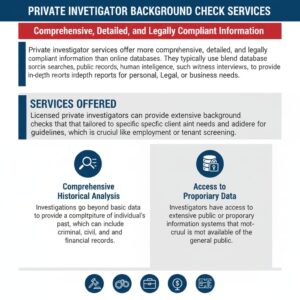
One major hurdle with free background check sites is the inconsistency in data quality, as they rely heavily on public records that might not be up-to-date or comprehensive. For example, a search for criminal history could miss recent arrests if the database hasn’t been refreshed, leading to incomplete pictures that affect decisions in employment or as a landlord. We’ve encountered clients frustrated by these gaps, prompting them to seek our services for real-time, verified information in Southern California.
Another issue revolves around privacy and data security; free platforms sometimes collect user information for marketing, raising concerns under regulations like those from the Federal Trade Commission. Unlike professional setups with strict protocols, these sites might expose sensitive details, such as email addresses or search histories, without adequate safeguards. This underscores the need for cautious use, blending free tools with expert oversight to maintain trustworthiness.
Inaccuracies often stem from aggregated data sources that don’t verify inputs, resulting in mismatched records or false positives on criminal searches.
Addressing this requires cross-referencing with multiple sites or professional validation to ensure reliability.
Free sites may share data without clear consent, violating privacy norms; users should review terms carefully and opt for encrypted platforms.
Mitigation involves using VPNs or limiting shared personal info during searches.
To get the most from free background check tools, start by refining your search queries with specific details like full names, locations, or dates, which helps narrow down accurate hits from vast databases. This approach can uncover hidden gems in public records, such as employment history or education verification, that broader searches might miss. In our practice at Excell Investigations, we advise clients to layer these free insights with professional analysis, especially when dealing with complex cases in Southern California where local nuances matter.
Combining multiple sites enhances comprehensiveness; one might excel in criminal record checks while another provides better social media profiles or contact information. This multi-faceted strategy mimics professional workflows, boosting reliability without immediate costs. Remember, while free, these tools should align with privacy laws to avoid unintended consequences.
Use Boolean operators or exact phrases in queries to filter results, improving precision in criminal searches or people lookups.
Incorporate location filters for Southern California-specific data, refining outputs for relevance.
Pair free checks with government portals for official validations, strengthening overall findings.
Leverage social networks for supplementary details like professional backgrounds.
Many wonder if free background checks are truly reliable for serious purposes like employment screening.
The answer is they can be a good start but often lack the depth needed for FCRA-compliant decisions, potentially missing key elements like detailed criminal history or financial records. Based on our extensive experience, we recommend using them as preliminary tools and following up with professionals to ensure accuracy and legality.
Another common query is how these checks handle privacy concerns. Free sites must comply with regulations, but enforcement varies; users should be aware that searching someone’s records without consent can raise ethical issues. We’ve guided numerous clients through this, emphasizing informed use to protect all parties involved.
Typical findings include public criminal records, address histories, and basic contact details, though depth varies by site.
Deeper elements like credit history require paid or professional access.
Most impose daily quotas or result caps to encourage subscriptions, limiting extensive use.
Overcoming this involves spacing searches or combining platforms strategically.
Navigating the world of online background checks can feel overwhelming with so many options promising quick insights into someone’s past.
This guide focuses on the best background check sites that offer meaningful free or low-cost starting points, helping you uncover public records like contact details, address histories, and sometimes hints at a person’s criminal history without immediate high costs. We draw from extensive testing and user experiences to highlight platforms that stand out for ease of use, data breadth, and transparency. Whether you’re verifying a new acquaintance, reconnecting with someone, or just curious, understanding these background check websites empowers better decisions.
At Excell Investigations in Southern California, we’ve seen how starting with these tools can provide a solid foundation, but often leads clients to us for deeper, verified investigations. Read on to discover why these sites matter and how to use them effectively for accurate results.
Choosing the best background check service involves looking beyond flashy ads to factors like data sources, update frequency, and user privacy. Leading background check providers aggregate information from court records, public databases, and other open sources to compile a background report that might include relatives, past addresses, or even social media links.
For example, when running background checks on potential dates or neighbors in Southern California, a reliable service quickly surfaces basic details without overwhelming you with irrelevant info. We’ve noticed that the top ones balance speed with comprehensiveness, pulling from vast databases to minimize gaps in a person’s criminal history or employment background.
The background check process typically starts with a simple name or phone search, evolving into detailed reports if you opt in. Strong services prioritize accurate results by regularly refreshing data, avoiding the pitfalls of outdated records that plague lesser sites.
Privacy is another cornerstone; reputable background check companies adhere to guidelines that protect consumer information while allowing personal use. This matters because misuse, especially in employment scenarios, can invite legal issues under the Fair Credit Reporting Act.
Many of the best background check sites offer mobile apps for convenient searches, letting you run a quick background search anytime. They often include reverse phone or email lookups, expanding beyond basic name queries.
Reports vary, but the strongest ones organize information clearly, highlighting potential criminal records or aliases without burying you in jargon.
Factors Influencing Report Quality
Data accuracy depends on source diversity; sites connected to multiple state and county databases tend to deliver more complete views of someone’s history.
User-friendly interfaces make the difference, turning complex public records into readable summaries.

Among the best background check sites, a few consistently rise to the top for their robust databases and straightforward approaches. Platforms like BeenVerified excel at compiling contact information and location histories, making them ideal for people search sites when you need to track down old contacts. In our hands-on reviews, it often delivers quick snapshots of public records, though full reports require a subscription. Similarly, Instant Checkmate stands out for detailed criminal searches, pulling from extensive sources to highlight potential arrests or convictions in a person’s criminal history.
These background check websites function as aggregators, scanning vast online records to produce a cohesive background report. For casual users, they provide value through reverse lookups or basic profiles without upfront payments in many cases. However, for critical needs like background checks for employment, they fall short of professional standards, which is where services like ours at Excell Investigations come in, offering verified, in-depth record searches tailored to Southern California cases.
BeenVerified ranks highly for its clean interface and broad coverage, often uncovering email addresses, phone numbers, and social profiles alongside public records.
It’s particularly useful for verifying online sellers or dates, with reports that include possible relatives and past residences.
Instant Checkmate focuses on criminal data, frequently surfacing arrest records or court mentions that other sites might miss.
The platform’s strength lies in speedy compilations, though results can vary based on available public info.
Conducting background checks starts with gathering basic details like a full name and location to narrow results. The background check process on top sites involves entering this info into their search bar, then reviewing preliminary matches. To run a thorough background search, cross-reference multiple platforms, as each draws from different databases. For instance, one might excel at property records while another shines in criminal history lookups.
Effective use means understanding limitations; free versions offer teasers, but detailed background check reports often need payment. Always verify findings, especially for sensitive areas like a person’s criminal history, by checking official sources when possible. In Southern California, local court records can complement online tools for added certainty.
Begin with broad queries, then refine using revealed details like middle initials or past cities for precision.
Use reverse tools for unknown callers, turning a phone number into a full profile.
Don’t rely solely on one site; discrepancies arise from varying update cycles.
Be mindful of privacy—use info responsibly to avoid ethical or legal missteps.
Choosing a background check provider requires weighing factors like cost, coverage, and reviews. The best background check service for one person might prioritize speed, while another needs depth in public records. Consider how often you’ll use it—frequent searchers benefit from subscriptions on sites like BeenVerified or Instant Checkmate.
Evaluate based on your goals: personal curiosity favors user-friendly people search sites, while deeper needs point to specialized providers. Transparency in pricing and data sources builds trust, ensuring you get value without surprises.
Prioritize sites with strong user feedback on accuracy and support.
Check for mobile compatibility if you prefer app-based searches.
Trials let you test depth without long-term commitment.
Look for clear cancellation policies to avoid billing issues.
Using a background check responsibly enhances safety in personal and professional interactions. Whether vetting a renter or researching a business contact, these tools reveal public aspects of someone’s history. Online background checks provide quick overviews, but interpreting results thoughtfully is key—context matters in records like old addresses or minor infractions.
For employment or landlord decisions, stick to compliant methods to stay legal. In everyday scenarios, they offer peace of mind, like confirming a date’s background information.
Use for reconnecting safely or verifying online profiles.
Helpful in spotting inconsistencies in stories.
Respect privacy; use findings judiciously.
Cross-verify for fairness.
True free options exist through government portals or basic search sites, offering glimpses into public records without fees. However, comprehensive background check results usually involve some cost for full access. Sites advertising “free” often provide teasers, leading to paid upgrades for details.
They work well for basic verification but may lack depth in areas like nationwide criminal searches.
Government databases for court or vital records.
Aggregator hubs linking to official sources.
Slower, manual processes.
Incomplete national coverage.


 Contact Us
Any question or remarks? Just write us a message.