
Navigating the world of employment in California often involves understanding the intricate rules surrounding background checks, especially for both job seekers and employers aiming to stay compliant.
This article dives deep into California background check laws, explaining what employers can legally see on reports, the protections in place like the Fair Chance Act, and how these regulations impact hiring processes. It’s worth reading because it breaks down complex legal concepts into straightforward insights, helping you protect your rights or ensure your business practices align with state requirements.
As experts at Excell Investigations in Southern California, we specialize in reliable background checks that adhere strictly to these laws, offering 24/7 free consultations to guide you through any concerns.
Whether you’re an applicant worried about your criminal history or an employer seeking compliant screening, this piece provides authoritative, trustworthy advice drawn from over two decades of experience serving clients in Riverside County and San Bernardino.
In today’s job market, where trust and safety are paramount, California has established robust regulations to balance employer needs with individual privacy rights. These laws, including the California Fair Chance Act and provisions under the Fair Credit Reporting Act, prevent unfair discrimination based on criminal histories while allowing employers to make informed decisions.
By exploring these topics, you’ll gain a clearer picture of what shows up on an employment background check in California, why certain information is restricted, and how to navigate potential pitfalls. Our goal at Excell Investigations is to empower you with knowledge that fosters fair employment practices, drawing on our network of investigative agents to deliver accurate, compliant services right here in Southern California.
Employers in California often turn to background checks as a key step in the hiring process to ensure they’re bringing on board individuals who align with their company’s values and safety standards. These checks help verify details like education, employment history, and criminal records, providing a layer of protection against potential risks such as negligence in employment or workplace incidents.
Under California employment law, which includes the California Labor Code and Civil Code, employers must follow strict guidelines to avoid violating privacy rights or facing lawsuits related to employment discrimination.
For instance, a company in Los Angeles might use a background check to confirm a candidate’s driver’s license validity for a role involving vehicle operation, ensuring regulatory compliance and occupational safety.
Beyond basic verification, background checks in California serve to mitigate broader risks, like data breaches or civil rights violations under the Civil Rights Act of 1964. Employers may review elements from the sex offender registry or conviction records, but only within the bounds set by state regulations that prohibit considering certain arrests or expunged crimes.
This practice not only supports fair hiring but also helps in building a trustworthy workforce, especially in sensitive fields like health care or education. At Excell Investigations, we’ve seen how these checks, when done right, can prevent costly mistakes, and we offer 24/7 free consultations to discuss tailored solutions for your needs.
The depth of information accessed during a California background check can vary, but it’s always framed by laws aimed at preventing unfair treatment based on criminal history. Employers must consider factors like the nature of the crime and its relevance to the job, as outlined in the California Fair Chance Act.
This ensures that decisions aren’t made solely on past convictions but on a holistic view of the candidate’s qualifications.
California background check laws form a protective framework designed to safeguard both employers and applicants from misuse of personal information. Central to this is the California Fair Chance Act, which prohibits employers from inquiring about criminal histories until after a conditional offer of employment has been made.
This law, part of broader labor law efforts, aims to reduce employment discrimination by giving individuals with past convictions a fair shot at jobs. Additionally, the Fair Credit Reporting Act at the federal level intersects with state rules, requiring transparency in how consumer data is handled during background screening.
Delving deeper, regulations under the California Civil Code, such as Section 1785.20.5, limit what can appear on reports, excluding arrests that didn’t lead to convictions after a certain period. Employers in California must also navigate local laws in areas like Los Angeles, which may impose even stricter rules on background check practices.
These laws collectively ensure that employment decisions aren’t unduly influenced by irrelevant criminal history, promoting equity in the recruitment process.
Understanding these laws helps prevent common pitfalls, like failing to provide adverse action notices, which can lead to legal liabilities. At Excell Investigations, we emphasize compliant practices in our services, offering 24/7 free consultations to help businesses align with these requirements seamlessly.
The California Fair Chance Act significantly reshapes how employers approach criminal background checks, mandating that inquiries into criminal histories occur only after a job offer is extended. This shift aims to level the playing field for applicants with past convictions, reducing automatic disqualifications based on criminal records alone.
Employers must evaluate the relevance of any conviction to the job, considering factors like time elapsed and rehabilitation efforts, which fosters more inclusive hiring practices.
In practice, this act intersects with other regulations, such as those governing the use of criminal history in employment decisions, ensuring that prohibitions on certain questions promote equity. For businesses in Southern California, complying means revising application forms and training HR teams, ultimately leading to a more diverse workforce.
California laws impose clear limitations on background check reports to protect consumer privacy, barring information like arrests without convictions after seven years. This ensures that employers focus on relevant, current data rather than outdated or irrelevant details. The Investigative Consumer Reporting Agencies Act further regulates how agencies compile reports, mandating accuracy and relevance.
These restrictions help prevent discrimination, especially in fields requiring licenses or safety checks, by focusing on verifiable facts like convictions or driving records.
How Do Federal Laws Interact with California Background Check Regulations?
Federal laws like the Fair Credit Reporting Act complement California regulations by requiring consent and accuracy in reporting, applying nationwide but with state-specific enhancements. In California, this means employers must provide pre-adverse action notices, allowing applicants to dispute errors.
This interaction strengthens protections against employment discrimination, ensuring background checks are fair and transparent.


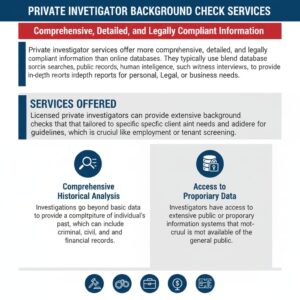
Conducting a background check in California requires a step-by-step approach that prioritizes compliance with state and federal laws to avoid penalties. Employers start by obtaining written consent from the applicant, clearly disclosing the check’s scope, which might include criminal record checks, credit checks, or driver’s license verifications. Following this, partnering with a qualified background check provider ensures the process adheres to the California Consumer Credit Reporting Agencies Act, delivering accurate and limited information.
The process involves reviewing the report for job-relevant details only, such as convictions that could impact safety or trust in roles like those involving motor vehicles. If adverse information surfaces, employers must provide a pre-adverse action notice, giving the applicant time to respond or correct errors, which upholds fairness under the California Employment Law.
At Excell Investigations, we guide clients through this with expertise, offering 24/7 free consultations to customize compliant strategies.
California law prohibits employers from considering certain elements in criminal background checks to prevent unfair barriers to employment. For instance, arrests that didn’t result in convictions are generally off-limits, as are convictions older than seven years in many cases, under the state’s consumer protection regulations. This framework, bolstered by the California Civil Rights Department, aims to reduce recidivism by not penalizing individuals for past mistakes that have been legally resolved, like through expungement.
Moreover, employers cannot base decisions on marijuana-related convictions older than two years, reflecting evolving policies on drug offenses. These prohibitions extend to inquiries about sealed or juvenile records, ensuring that background check practices don’t perpetuate cycles of discrimination.
Violating California background check laws can lead to severe penalties, including fines, lawsuits, and reputational damage. Under the California Labor Code, non-compliance with consent requirements or improper use of criminal history can result in civil penalties up to $10,000 per violation, as enforced by the California Civil Rights Department. Employers might also face class-action suits for systemic failures, such as not providing adverse action notices, which amplify financial risks.
Beyond monetary costs, violations can trigger investigations by regulatory bodies, potentially leading to mandated policy changes or even business restrictions. Real-world examples include settlements where companies paid millions for failing to comply with the Fair Chance Act, highlighting the importance of expert guidance.
At Excell Investigations, we provide comprehensive California background checks tailored to meet legal standards and your specific needs. Our process includes thorough record searches, asset verifications, and more, all conducted with the utmost accuracy and discretion. With offices in Downey and a global network, we’re equipped to handle diverse requests efficiently.
We prioritize compliance, ensuring every check respects privacy laws and delivers actionable insights. Contact us for a 24/7 free consultation to start.
Excell Investigations stands out for its reliability in Southern California, with over 20 years serving Riverside and San Bernardino counties. We focus on ethical, compliant services that protect both employers and applicants.
How Our Process Ensures Compliance?
Our background check process is meticulously designed to align with California laws, incorporating consent verification and limited reporting.
Professional screening from Excell enhances hiring confidence, reducing risks associated with unverified information.

In the dynamic landscape of California’s job market, understanding background check laws is essential for both employers and job seekers to navigate hiring processes fairly and legally.
This comprehensive guide explores pre-employment background checks, the types of background checks available, and how California state law regulates what employers can see, including criminal background checks for employment and compliance with applicable laws. Drawing from our expertise at Excell Investigations, a trusted provider in Southern California, we delve into these topics to offer clear, actionable insights.
Whether you’re concerned about background check results or need to perform criminal background checks compliantly, this article is worth your time because it demystifies complex regulations like the California Fair Chance Act and California Civil Code § 1785.20.5, helping you avoid pitfalls while promoting fair employment.
As specialists in performing background checks, we at Excell Investigations offer 24/7 free consultations to assist with tailored solutions, ensuring you stay informed and protected in areas like Riverside County and San Bernardino.
California’s robust framework of laws applying to background checks balances employer needs with individual rights, preventing discrimination based on criminal history information. From the state of California’s ban-the-box policies to federal and California overlaps in the Fair Credit Reporting Act, these rules dictate background check requirements, such as making a conditional employment offer before inquiring about convictions.
By reading on, you’ll learn more about California background check policies, why many California employers rely on third-party background check services, and how to conduct checks on employees without violating privacy. Our two decades of experience at Excell Investigations underscore the importance of these practices, providing reliable services like California MVR checks that may reveal driving records relevant to job safety.
Employers across the state of California often perform background checks to build a secure and reliable workforce, verifying details that could impact job performance or company liability.
Under California state law, these pre-employment background checks help assess risks associated with hiring, such as reviewing criminal history information or motor vehicle records through California MVR checks that may include violations or suspensions. This practice is particularly vital in industries where safety is key, like transportation or healthcare, where employers must ensure candidates meet occupational standards without running afoul of employment discrimination laws.
Moreover, performing criminal background checks allows businesses to make informed decisions after making a conditional employment offer, as California law requires employers to delay such inquiries to promote fairness. Many California employers integrate these into their background check policy to comply with applicable laws, avoiding penalties from non-compliance.
At Excell Investigations, we’ve assisted countless clients in Southern California with these services, emphasizing how a well-structured check can prevent issues like negligence claims.
The types of background checks vary, but all must align with background check requirements that protect consumer privacy. Employers might opt for comprehensive background check packages that include credit checks or record searches, tailored to the job’s demands.
California employers must adhere to a suite of laws applying to background checks, including the California Fair Chance Act, which outlines what California employers cannot ask about criminal histories until after a conditional offer. This California state law, reinforced by California Civil Code § 1785.20.5, restricts the scope of information in reports, ensuring background checks must exclude certain arrests or expunged records. Compliance with applicable laws is non-negotiable, as violations can lead to significant penalties, and employers are required to provide disclosures and obtain consent before proceeding.
In addition, federal and California regulations intersect, with the Fair Credit Reporting Act mandating accuracy in reporting and the right to dispute background check results. Several California counties and cities, particularly in Southern California, impose additional layers, like stricter timelines for adverse action notices. This multifaceted approach protects applicants while allowing employers to perform criminal background checks responsibly.
Understanding these background check requirements helps businesses craft a solid background check policy. At Excell Investigations, we specialize in guiding clients through these intricacies, offering 24/7 free consultations for compliant strategies.
The California Fair Chance Act requires employers to delay inquiries into criminal backgrounds, fundamentally altering how pre-employment background checks are conducted. This law ensures that decisions aren’t prematurely based on criminal history information, giving applicants a chance to showcase qualifications first. In the state of California, this promotes rehabilitation and reduces recidivism by limiting automatic disqualifications.
Practically, it means employers evaluate relevance post-offer, considering factors like time since the offense. This aligns with broader California employment law goals of fairness.
Under California law, background checks must omit certain details, like arrests without convictions after seven years, as per California Civil Code § 1785.20.5. This protects privacy and prevents irrelevant data from influencing hires.
These limits ensure reports are job-specific, excluding sealed records or minor offenses.
Federal laws like the FCRA work alongside California rules, requiring consent and error correction in background check results. This dual layer strengthens protections against misuse.
In practice, it means enhanced transparency for applicants in California.
To perform background checks compliantly, California employers must start with clear disclosures and consent, aligning with laws that require employers to inform candidates about the process. This includes specifying the type of background check, whether it’s a criminal record review or California MVR checks that may reveal driving infractions. Partnering with accredited California Investigative Consumer Reporting Agencies ensures reports are accurate and limited to permissible information.
After obtaining background check results, employers review them post-conditional offer, adhering to California state law on individualized assessments. This step-by-step method minimizes risks of violations.
Many California employers choose comprehensive background check packages for efficiency. We at Excell Investigations provide such services, with 24/7 free consultations available.
California employers cannot ask about or consider certain criminal history elements, such as non-conviction arrests, under state prohibitions. This extends to expunged or sealed records, protecting applicants from undue scrutiny.
These rules, part of broader compliance with applicable laws, aim to foster second chances.
Violations can result in fines, lawsuits, and operational setbacks, as California law requires employers to follow strict protocols. Non-compliance with background check requirements often leads to penalties from regulatory bodies.
Real cases show settlements in the millions for systemic failures.
We at Excell Investigations offer expert services to perform background checks in California online or in-person, focusing on compliance and accuracy. Our background check packages cover everything from criminal checks to asset searches, tailored for Southern California clients.
Contact us for 24/7 free consultations to learn more about California background checks.
Our commitment to ethical practices sets us apart, ensuring every check complies with California state law.
We meticulously follow all steps, from consent to reporting, to guarantee adherence.
Professional checks enhance hiring precision and legal security.


 Contact Us
Any question or remarks? Just write us a message.